Teeth

Teeth are important part, and preserving them till you die is vital. Teeth are not supposed to fall off in old age, as is usually told by our parents. They are designed to go with you to heaven. Protecting them is very easy, just brush properly, floss couple of times a week and see a dentist.

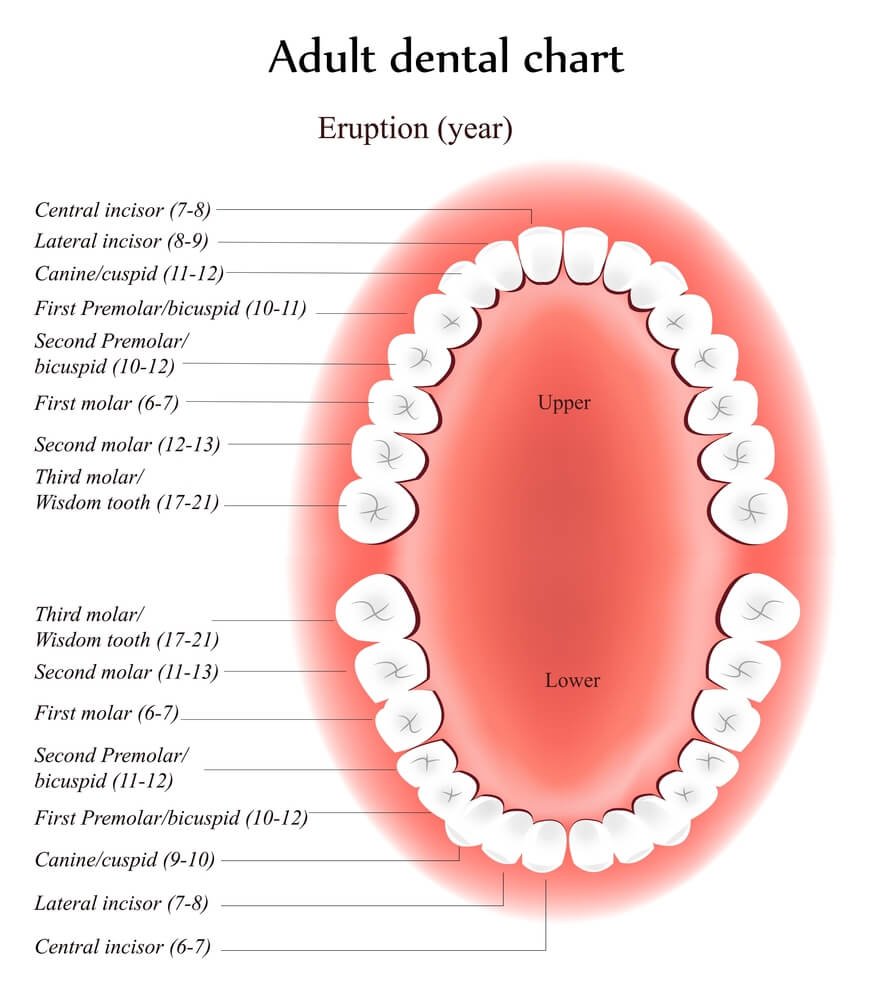
Here's the diagram for Adult teeth:


Adult teeth


Teeth phases (Dr Teeth) => https://www.youtube.com/watch?v=XNbzd6yqNbg


Atomic Bonds

So far we saw atoms in isolation. Atoms combine together to form molecules which take place via some chemical reaction. The individual atoms form bonds with other atoms, which makes these molecules. These bonds take energy to form, and hence will require energy to break them apart to release individual atoms. Atoms want to have full orbit (or 2 or 8 electrons in their outermost shell), so whatever reaction lets them achieve it, they go for it.

Before we learn Bonds, let's look at electronegativity.


Electronegativity (EN):

Electronegativity refers to the relative ability of an atom to attract it's electrons. An atom which has more +ve charge in nucleus (i.e more protons) will attract it's electrons stronger, meaning it's more electronegative. However, if the atom is bigger (due to higher Z), then electrons will be further out from protons, meaning the force is reduced (as 1/R^2). So, based on this Fluorine is arbitrarily assigned EN=4, which is the highest in periodic table. EN increases as we go from left to right in a row, and decreases as we go from top to bottom in a column. Lowest EN is for Caesium=0.8, with Hydrogen's EN=2.2

Link => https://chem.libretexts.org/Bookshelves/Physical_and_Theoretical_Chemistry_Textbook_Maps/Supplemental_Modules_(Physical_and_Theoretical_Chemistry)/Physical_Properties_of_Matter/Atomic_and_Molecular_Properties/Electronegativity

So, based on EN trend, elements which are in the diagonal line going from top left to bottom right, have almost same EN< which results in many of their chemical properties being very similar. Since no 2 diff atoms have same EN, if bonds are formed b/w the, the more EN element will attract the electrons more than the less EN element does.

As it is usually calculated, electronegativity is not a property of an atom alone, but rather a property of an atom in a molecule. Even so, the electronegativity of an atom is strongly correlated with the 1st IE (read in IE in periodic table section).

NOTE: metals have low EN, while non metals have higher EN.


There are 2 kind of Bonds that exist b/w atoms. One is the bond that exist within a molecule b/w diff atoms of a molecule, and other is the one that exists b/w atoms of different molecules of same compound.

Intramolecular Bonds:

Intramolecular forces are the forces that hold atoms together within a molecule. They are responsible for forming intramolecular bonds.

There are 3 different kinds of intramolecular bonds:

1. Ionic Bond: These are bonds that are formed when one of the atoms loses electrons while other gains them, resulting in +ve and -ve ions, which are attracted to each other and form bonds. These bonds are usually formed b/w a metal and non metal, as they are on opposite sides of periodic table. Ex: Na-Cl bond is ionic. Certain ions are referred to in physiology as electrolytes (including sodium, potassium, and calcium). These ions are necessary for nerve impulse conduction, muscle contractions and water balance.

2. Covalent Bond: These are bonds that are formed when the atoms share electrons b/w each other. Here electrons are shared equally b/w the 2 atoms involved to complete their outer shell (require 2 or 8, electrons depending on the outermost shell number, known as the octet rule). These bonds are usually formed b/w atoms of non metal element (Same or different), i.e O atoms form covalent bond with each other to form O2. Similarly for H2 . Other ex: CO2 where C forms 2 covalent bonds, one with each O atom. Many bonds commonly found are covalent bonds.ex: H2O. Sharing of 1 electron results in 1 covalent bond, similarly 2 or 3 forms double or triple covalent bond. More the electrons shared, stronger the bond is. Ideally there shouldn't be any charge on any atom as they didn't give or take any charge. 2 types of covalent Bonds exist:

  1. Non Polar Covalent Bonds: What we know from EN is that, no 2 elements have same EN. When same elements forms bond as in H, the electrons will be right in middle of the bond, and no H atom has more force over these shared electrons. These bonds are called non polar covalent bonds (or pure covalent bonds). These bonds are also formed b/w atoms of different elements when their EN is very close to each other.
  2. Polar Covalent Bonds: Most atoms have different EN. When bonds are between diff atoms as in HCl, then the more EN atom will pull electrons closer to it than less EN one. Here Cl is more EN, so it gets shared electrons closer to itself, resulting in slightly -ve charge on Cl and slightly +ve on H. These kind of covalent bonds are polar, since they have developed a charge separation due to EN. Similar is the case for H2O where H has slight +ve charge and O has slight -ve charge. Non polar Covalent bonds have no charge develop as in O2. If the EN diff is too big, the electrons may get so much closer to more EN atom, that the bond doesn't look like covalent bond, but rather an ionic bond. So, an ionic bond is just a highly polar covalent bond. Thus there is no clear cut separation b/w Ionic and Covalent bond. They are the same bond, but when charge separation is too large, we refer the covalent bond as ionic bond.

3. Metallic Bond: This is a type of extreme covalent bond that specifically occurs between atoms of metals, in which the valence electrons are free to move through the lattice. This bond is formed via the attraction of the mobile electrons—referred to as sea of electrons—and the fixed positively charged metal ions. Metallic bonds are present in samples of pure elemental metals, such as gold or aluminum, or alloys, like brass or bronze. At first glance, they look like bonds b/w atoms of different molecule, but metals don't form molecules amongst their own atoms. They remain as a large monolithic structure, all atoms within which are bonded together. Here 1 electron is shared across multiple atoms (i.e doesn't belong to any particular atom).

Rules of which type of bond forms => https://chem.libretexts.org/Bookshelves/Introductory_Chemistry/Introduction_to_General_Chemistry_(Malik)/03%3A_Compounds/3.09%3A_Intramolecular_forces_and_intermolecular_forces

These are the 3 rules of these Ionic and covalent bonds:

  • Covalent/Metallic: A small electronegativity difference (EN < 1.9) leads to a covalent bond or metallic bond
    • Covalent bonds: Nonmetals tend to make a covalent bond with each other. Nonmetals also have higher EN. So, when the average EN of the bonded atom is high and the EN difference between them is low, they tend to make a covalent bond.
      •  No electronegativity difference between two atoms leads to a pure non-polar covalent bond. Ex: CH4 .
      • A small electronegativity difference leads to a polar covalent bond. Ex: H2O
    • Metallic bonds: Metals tend to make the metallic bond with each other. Metals also tend to have lower EN values. So, when the average EN of the bonded atom is low and the EN difference between them is also low, they tend to make a metallic bond. ex: Cu, Al, etc.
  • Ionic: A large electronegativity difference (EN > 1.9) leads to an ionic bond. Generally, a bond between a metal and a nonmetal is ionic. Ex: NaCl

Metallic bond is the strongest, followed by Ionic, then polar covalent bond, and lastly non polar covalent bond.

Metals vs Non Metals:

Periodic Table: In periodic table, metals are on usually on left side and in middle, while non-metals are on right side. In between metals and nonmetals is a narrow bank of elements called metalloids (i.e Carbon, Silicon, etc). 

Trends as explained above are listed again below:

  • Metal and Non metal form an ionic bond i.e NaCl. 
  • 2 Non metals form a covalent bond. i.e O2.
  • 2 Metals form a metallic bond. Metals have high melting point (solid at room temp), are malleable, good thermal and electrical conductors.

Metal Alloys:

When we melt 2 or more metals, and then solidify them, we get an alloy. Even though it looks like a simple mixing, the properties of alloy are very different. Usually alloys are stronger, durable and more suitable for multiple applications.

  • Stone Age (3.4mya - ~3000 BC): This is where humans didn't know about metals, and used stones to make weapons, etc.
  • Copper Age (~5000 BC - ~3000 BC): The earliest metal known to mankind was Copper, which was discovered around 9000 BC. Copper smelting to make beads etc were known around 5000 BC-6000 BC. Copper melts at around 1100C, which wasn't possible to do before 5000 BC. Copper age isn't called out separately, but instead clubbed with Bronze age.
  • Bronze Age (~3500 BC - ~1200 BC): Tin was first smelted in combination with copper around 3500 BC to produce Bronze - and thus giving place to the Bronze Age. Bronze is an alloy of copper with 87.5% Cu and 12.5% Tin. Brass, another alloy of Cu and Zn with 2/3 Cu and 1/3 Zn was also widely used. All these alloys also had addition of few other metals and non metals to give them specific properties. These alloys were stronger, more ductile and malleable.
  • Iron Age (~1200 BC - ~500 BC): Even though iron was known from before 5000 BC, it wasn't until the discovery of smelting around 3000 BC that led to the start of the Iron Age around 1200 BC and the prominent use of iron for tools and weapons. Iron was the hardest to melt of all known metals at that time, as it's melting pt was 1500C. Around 500BC, Iron smelting became common.

Different types of Alloys:

  • Interstitial Alloy (IA): When the size of atoms of the constituents of an alloy are very different, then the smaller sized atoms get in between the bigger sized atoms (in b/w the spaces w/o displacing the bigger atoms). These are called Interstitial Alloy.
    • ex: Steel: Alloy of Iron and Carbon. Carbon is much smaller in size than Fe and gets into the vacant spaces. Carbon content is very low at 1%.
  • Substitutional Alloy (SA): When the size of atoms of the constituents of an alloy are very different, then the smaller sized atoms get in between the bigger sized atoms (in b/w the spaces w/o displacing the bigger atoms). These are called Interstitial Alloy.
    • ex: Brass: Alloy of Copper and Zinc. Both Copper and Zn are of almost same size, Zn ends up substituting Cu atoms. Brass has 2/3rd Cu and 1/3rd Zn as mentioned above.
  • Combination of Interstitial and Substitutional Alloy (ISA): We may have alloys where both interstitial and substitutional atoms are present.
    • ex: Stainless Steel: Alloy of Iron, Chromium (18%) and Carbon. Here Chromium being about the same size as Iron, ends up substituting Fe, while C being much smaller gets into interstitial spaces. Chromium improves the corrosion property of steel tremendously. It was found by accident in 1912 where a metallurgist noticed a particular alloy in a heap not rusting at all. It formed the basis of human progess in 20th century due to non resistant ability to build skyscrapers, etc.

One thing you will notice is that these alloys have lower melting pt than the lowest melting of all of the constituents. This is due to Eutectic effect, where atoms of one metal end up disrupting the regular crystalline structure of another metal. This results in even weaker interatomic bonding than in pure form, and hence lower melting pt. As an ex: Both Cu nd Silver melt at 1000C, but the alloy melts at a lowest temp of 800C @ 28% silver. Of course at 2 end points, the melting temps are at 1000C, but they start coming down as % of 1 metal increases, and then again start going back up as % of other metal inc.


Intermolecular Bonds:

Intermolecular forces are forces that exist between molecules. They are responsible for forming intermolecular bonds. They are explained in section "Phases of matter".


Organic Chemistry

This branch of chemistry deals with all carbon containing compounds. By some defn, it should contain a C-H or C-C bond to be considered an organic compound.  i.e CCl4, CO2, HCN (hydrogen Cyanide) are not considered organic (considered Inorganic), even though they all contain Carbon.

Khan Academy => https://www.khanacademy.org/science/organic-chemistry

Organic Chemistry Tutor (extremely popular channel on youtube with simple explanation of everything organic and everything else) => https://www.youtube.com/watch?v=B_ketdzJtY8&list=PL0o_zxa4K1BXP7TUO7656wg0uF1xYnwgm (1st introductory lesson from organic chemistry playlist)

Organic compounds

Organic compounds are very important to study. Due to carbon's ability to catenate (form chains with other carbon atoms), millions of organic compounds are known. Although organic compounds make up only a small percentage of Earth's crust, they are of central importance because all known life is based on organic compounds. Living things as plants incorporate inorganic carbon compounds into organic compounds (simple sugars) through a network of processes using CO2, H2O and sunlight. Most synthetically-produced organic compounds are ultimately derived from petrochemicals consisting mainly of Hydrocarbons, which are themselves formed from the high pressure and temperature degradation of organic matter underground over geological timescales. However in modern times, organic compounds are no longer defined as compounds originating in living things, as they were historically.

Dot diagram: Easy way to represent organic compounds. Every electron bond is represented as a line with 2 dots representing the 2 electrons. 2 covalent bonds (i.e 4 shared electrons) i shown with 2 parallel lines, while triple covalent bond (i.e 6 shared electrons) is shown with 3 parallel lines. Carbon has 4 valence electrons, so it forms 4 covalent bonds with other atoms. We always need 8 valence electrons (octet rule) to complete the shell for all atoms except Hydrogen/Helium which needs only 2 electrons in outermost shell. 

Hybridized orbitals for Carbon: C has 6 electrons as 1s2 2s2 2p2. But the 2s2 and 2p2 orbitals become 4 hybridized orbitals as 2sp3 hybrid orbitals. They all form a big lobe and small lobe kind of shape. See "periodic Table" section.

Carbon bonds => Carbon forms covalent bonds with other atoms. It forms both Polar and Non-polar bonds. Since EN (electronegativity) of C is 2.5, it forms non polar bonds with H (EN=2.2). However with N (EN=3), O (EN=3.5), F (EN=4), Cl (EN=3) which are more EN than C, it forms polar covalent bonds. This determines a lot of properties in hydrocarbons. For EN details, see in "Atomic bonds" section.


Integumentary System:

Integumentary system consists of skin and appendages as hair, nail. It also includes glands that generate sweat. The cells on top layer of skin as well as nail, hair, etc are dead cells.

Khan academy => https://www.youtube.com/watch?v=4zKjzl0futI&list=PLBWKfzsMAETxjVs5C_-vdYhZGIvQzIzfO


Skin:

Skin is impermeable, meaning it can't allow water to get in the body via the skin. Skin has multiple layers.

  1. Epidermis => The first 5 layers of skin. and are called strata or stratum. They are all keratinocytes or cells with keratin. The top 2 layers re dead, while next 3 are alive. These layers don't have any blood vessels as our nutrients and oxygen come from below, and hence it's harder and harder to get to the top cells. Hence top cells starting going dead.
    1. corneum: These are 15-20 layers of these cells which are flat cells. Word comes from "coroner's office" or where dead bodies go. This is the layer that gets shed from our body. Reptiles shed this layer in one piece, but for humans, this layer is in very small pieces that fall off our body w/o us seeing them.
    2. lucidum: These are dead cells. They lose their nuclei and other organelles.
    3. granulosum: They are keratin handling cells. These releases lamellar bodies, which provides the lipid layer that makes our skin impermeable. These cells work very hard, and so they are dead by the time they move to the upper layer or lucidum.
    4. spinosum: This is a spiny layer. The cells here are keratinocytes. The cells here overlap with each other, and the overlapping area is called desmosome. When we have less moisture or water in our body, these cells lose water and become shriveled. This causes them to become spiny (in star shape). There are also langerhans cells here, which provides immunity as it eats external invaders.
    5. basale: It's called basale, as it's the basal layer or the bottom layer. The cells here are keratinocytes (cytes mean cells). Rapid cell division happens here. Skin color comes from here. These cells are called melanocytes. This cells make special pigment called melanin. People with any skin color have same number of melanocytes, but the amount of melanin produced differs. Darker skin ppl have more melanin pigment in this layer.
  2. Dermis => The next 2 layers of skin are called dermis. Both the layers have connective tissues (CT), i.e kind of tissues that hold bones to muscles etc.
    1. Papillary dermis => It has loose CT, It's the 1st layer that has blood vessels. It has arterioles coming in, branching to become capillaries to transfer oxygen, nutrients to cells via diffusion to cells surrounding it. They finally join back tobecome veins, which carry deoxygenated blood back to heart, This layer also has nerve endings to feel touch/pain etc. The cell body for this nerve starts somewhere depper in Hypodermis layer. The nerve ending passes thru the Reticular dermis and ends in this layer.
    2. Reticular dermis => This has thicker, dense CT. It has tons of glands to secrete our sweat. It also has hair follicles from where the hair grows, and protrudes out from our top layer of skin. A muscle, arrector pilli muscle is attached to the follicle, which alows our hair to stand up )giving us goosebumps). This is involuntary muscle, so we have no control. It's more important for animals, where these muscles make hair stand up in cold weather. That allows warm insulating air layer embedded in the hair that gives warmth. This muscle is a vestigial organ, as it's there but is just a left over from our evolution. There are 3 types of sweat glands in this region:
      1. Holocrine glands => These are in the face, chest an back. They release sebum, an oily substance. They lubricate skin,which slows bacterial growth.
      2. Apocrine glands => These are in nipples, armpits, groins, etc. They are also called emotional glands, as they are released when are in stress, etc. They develop around puberty. These are used in animals to attract mates. Not so much in humans.
      3. Merocrine glands => They are found in rest of the body and are most common sweat glands. It's mainly water and salt that comes out from these glands.
  3. Hypodermis => Hypo means below, so this surface is just below the skin. It's also called subcutaneous layer. This layer has mostly fat. It's not part of skin. Muscles and bones sits below this layer.

In a hot environment, blood arteries relax. Relaxing blood vessels allow more blood to flow. They have RBC, WBC etc which bounce against the walls and transfer the energy to the walls of skin so that internals of the body gets cooler. Reverse happens when the it's colder outside, where arteries contract.

Burns: 1st, 2nd or 3rd degree burns are characterized by what layer of skin cells have burned. Buring of epidermis layer is 1st degree. Causes reddening of skin and lot of pain. 2nd degree burn is n=burning of Dermis layer and doesn't cause any pain as nerve cells themselves get burned. 3rd degree burn is burning of hypodermis and muscles/bones below it.


Hair and nails:

Hair and nail are comprised of cells. But they are not living cells, but dead cells. The only living cells in nails/hair are the cells at the root of these. As the cells die, they are pushed up by new living cells being formed.

Hair and Nail structure => https://www.youtube.com/watch?v=9zh-7hIiP3Q

Nails => nails are found in epidermis layer, with Nail root originating from there. Nail is actually part of epidermis. Nails are made of thick keratin, which are dead cells packed with keratin. Basale layer starts the growth process, with keratonocytes moving up and getting dead. Some of these move to the top of skin, while move sideways giving rise to nails.

Hairs => Hair is over all of our body, though the hears in some part as head grow lot more.Hair grows from the dermis (2nd layer of skin) and not from Epidermis. Hair follicle or hair root is in Reticular dermis as mentioned above. Hair grow about 1.25 cm/month (about 1/2 inch). That's why you need haircut every 3 months !! Hair shaft is the long pointy part of hair that goes thru the dermis, the epidermis and then protrudes out. HAir shaft is also all deead cells filled of keratine.


Human cells:

Before we dive into human cells, let's look at basic cell in general.

Cells:

Cell is the structural and functional unit of life. Cells have genes in them that decides how the cell is going to grow over time, and pass it's characteristics to new cells that develop from it. Cells reproduce through a process of cell division, in which the parent cell divides into two or more daughter cells and passes its genes onto a new generation. Though almost all life consists of cells, some life such as Viruses are non cellular. However, whether virus should be considered living being or not is controversial. They have been described as "organisms at the edge of life"  because they possess genes, evolve by natural selection, and replicate by making multiple copies of themselves through self-assembly. However, viruses do not metabolise and they require a host cell to make new products.

We'll mostly be talking about uni cellular and multi cellular life. Before that we will learn a bit about cell.

Video on cell structure => https://www.youtube.com/watch?v=URUJD5NEXC8

There are two kinds of cells, both of which consist of Cytoplasm enclosed within a membrane and contain many biomolecules. All cells have 3 things in common => cell membrane (to protect cell), cytoplasm (a jelly like liquid) and a genetic material (usually within a nucleus which determines what the cell is going to be like). The 2kind of cells are:

  • Prokaryotes: Prokaryotes are single celled organisms that lack a nucleus and other membrane bound organelles (organelles are little organs within cells). The word prokaryote comes from the the word pro meaning before and karyon meaning nut o kernel. Besides the absence of a nucleus, prokaryotes also lack mitochondria, or most of the other membrane-bound organelles that characterize the eukaryotic cell. Prokaryotes are asexual, reproducing without fusion of gametes. Link: https://en.wikipedia.org/wiki/Prokaryote
  • Eukaryotes: Eukaryotes are single or multi celled organisms that have a nucleus. All animals, plants, fungi, and many unicellular organisms, are eukaryotes. The word eukaryote comes from the the word eu meaning good and karyon meaning nut or kernel. Besides the presence of a nucleus, eukaryotes also contain other membrane-bound organelles such as mitochondria and Golgi apparatus. Mitochondria is the main powerhouse of the cell. Eukaryotes developed around 2 Gya. Link: https://en.wikipedia.org/wiki/Eukaryote. Eukaryotes can reproduce both asexually through mitosis and sexually through meiosis and gamete fusion.
    • mitosis reproduction (asexual): In mitosis, one cell divides to produce two genetically identical cells.
    • meiosis reproduction (sexual): In meiosis, DNA replication is followed by two rounds of cell division to produce four haploid daughter cells that act as sex cells or gametes. Each gamete has just one set of chromosomes, each a unique mix of the corresponding pair of parental chromosomes resulting from  genetic recombination during meiosis.

Sizes: Size of atom is about 0.2 Angstrom. Small molecules are about a nm. Proteins are about 10nm, while Viruses are about 100nm. Single cells start from about 1um, while multi cellular organisms are upto few mm. This link shows relative size of cells: https://en.wikipedia.org/wiki/Bacteria#/media/File:Relative_scale.svg

Plant and animal cell:

Video in detail (Intro to cell structure) => https://www.youtube.com/watch?v=vwAJ8ByQH2U

Cells will need to talk to each other if they need to transport information. In between the cells, we have a fluid called interstitial fluid. Interstitial fluid is mostly water with other dissolved substances in it like salt, sugar, protein, waste etc.The fluid inside the cell is called cytoplasm, but inside is referred to as cytosol. The cell membrane surrounding the cell separates these 2 fluids, but allows mechanism for solutes (or particles in interstitial/cytosol fluid) to flow in or out of the cells.

Intracellular and Extracellular fluids => https://courses.lumenlearning.com/suny-ap2/chapter/body-fluids-and-fluid-compartments-no-content/

Cell Membrane structure => https://www.youtube.com/watch?v=fJfTDc3WzQ8

Cell Membrane is made of molecules called phospholipids. Read more about it in Biology section. The bilayer phosphid forms a very close knit structure so that no external molecules can pass thru, unless they are very small in size and non polar (by being non polar, they can get inside to the tail of phospholipd molecule which is nonpolar). Besides the phospholipd bilayer structure, a cell membrane contains few more structures:

  • Chloesterol => controls what can pass thru the cell
  • Proteins => They behave like openings in the cell membrane and control what bigger particles can pass thru them.
  • Carbohydrates => Involved in cell identification

Transport across a membrane => https://www.youtube.com/watch?v=J5pWH1r3pgU

Receptors:

These protein structure in the membrane that we saw above allow movement of solutes in or out of the cells. They are called as receptors. They are selective as to what they will allow to pass depending on the protein structure. A cell has multipe of these protein receptor and each is selective. Different kind of cells have different receptors, i.e heart cells have different receptors than lung cells.